Sometimes I feel my memory begins somewhere else, not inside me. In a cold server, far away, where photographs and voices are kept better than I ever could. And yet, when I try to remember something truly, I never find the right image. Only a vibration, like a red thread clinging to the skin, without saying exactly where it comes from.
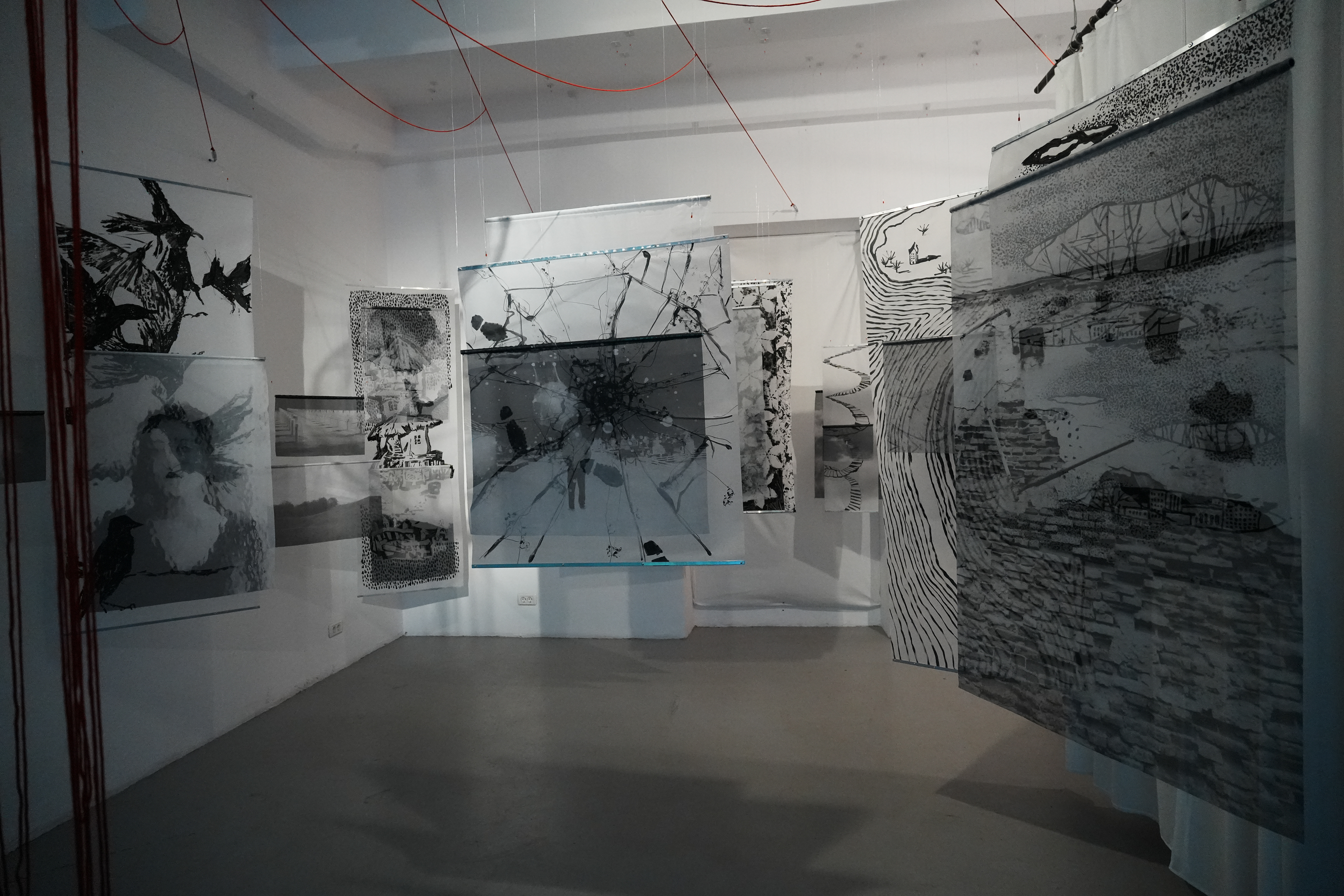
The Aftermath, exhibition view, /SAC Malmaison, 2026.
Andreea Grigoraș & Lăcră Grozăvescu & Elena Maxemciuc
Mixed-media installation, photography, textile, graphics, steel
Variable dimensions
The Aftermath speaks about what remains after something disappears. Not the moment of loss, but that suspended space where the body tries not to fall apart. The photographs hang in the air like incomplete evidence, and the drawings come over them like attempts to fill in the gaps. It’s like when you edit an old picture and keep adding layers, but no filter takes you back to where you were.
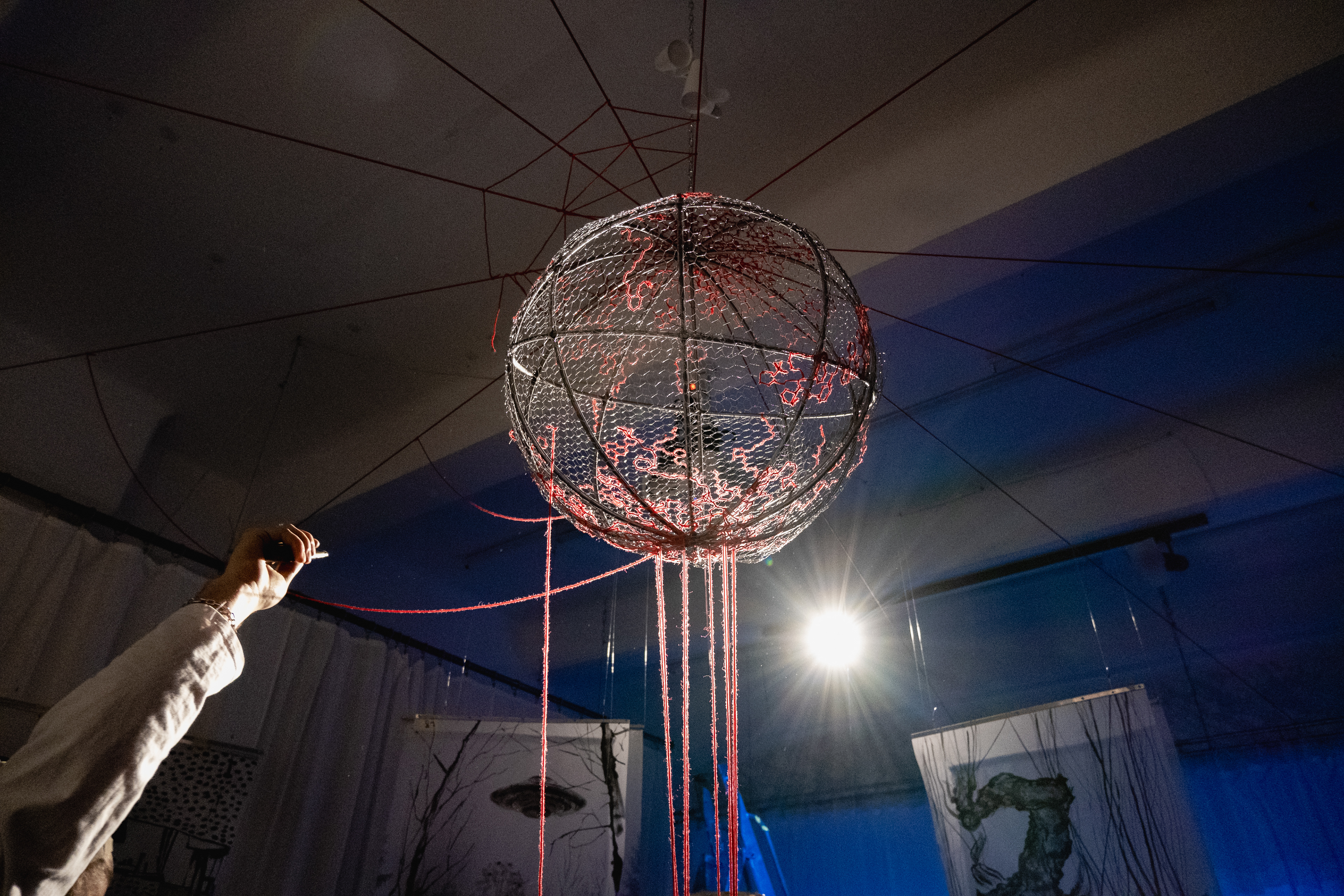
At the center, there is an artificial synapse, wrapped in wire and copper, like an improvised brain trying to remember how to function. Red threads leave it in every direction, connecting images, empty spaces, and traces. It looks like a map of a conversation you once had with someone important, but now you no longer know exactly what was said, only that it mattered.
The images are not documents. They are fragments: a tree that no longer exists, a bird passing too fast, a city that no longer resembles itself. They are things that cannot be archived, only felt. The kind of things that stay in the body, not in a camera roll.

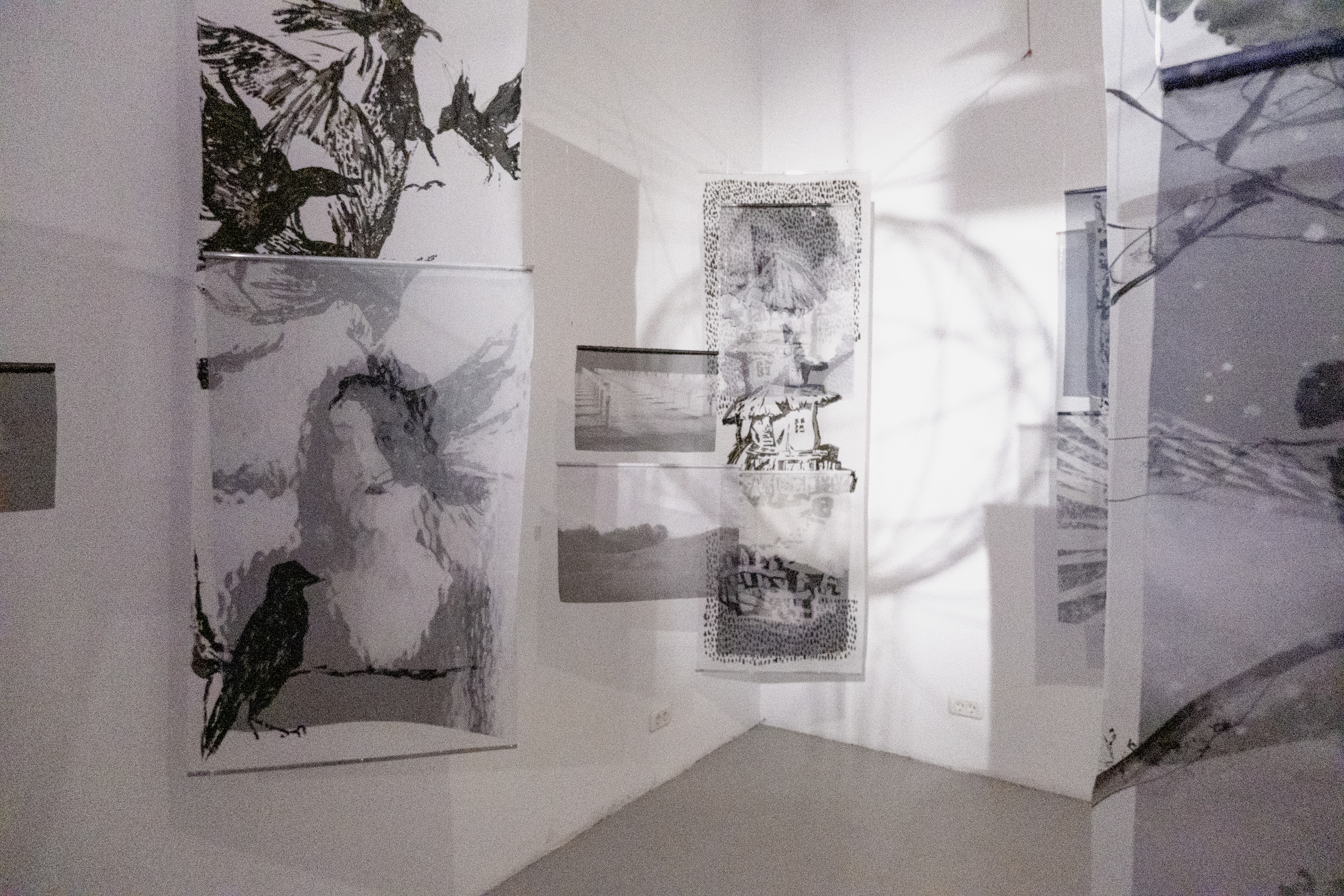
Maybe this is all we can do with memory now: let it be a transparent space where light passes through images and changes them. Accept that it isn’t whole, nor stable. It reconfigures itself, like a feed updating on its own, but with more gentleness.
In The Aftermath, memory doesn’t try to compete with reality. It only touches it lightly, as if asking: “Are you still there?”